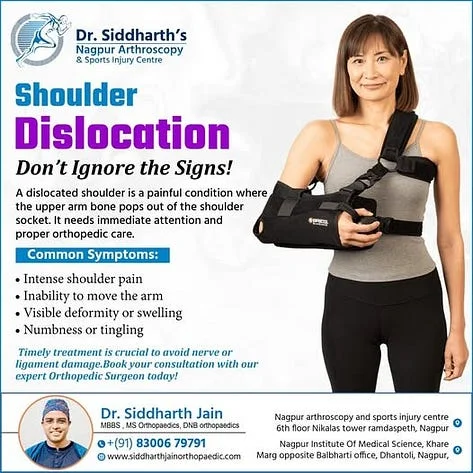
A shoulder dislocation is one of the most common orthopedic emergencies, often caused by accidents, sports injuries, or sudden impacts. The condition occurs when the upper arm bone (humerus) slips out of the shoulder socket (glenoid), leading to severe pain, swelling, and restricted movement.
Understanding Shoulder Dislocation
The shoulder joint is the most mobile joint in the body, allowing a wide range of motion. This flexibility, however, comes with a downside — it is more prone to dislocation than other joints.
There are two main types:
Anterior Dislocation — The head of the humerus moves forward out of the socket (most common).
Posterior Dislocation — The humeral head moves backward (less common, usually after seizures or electric shocks).
Symptoms of Shoulder Dislocation
If you suspect a shoulder dislocation, look for these signs:
Severe shoulder pain immediately after injury
Visible deformity or bulge in the front or back of the shoulder
Swelling and bruising in the shoulder area
Limited or no movement in the arm
Weakness, tingling, or numbness in the arm or hand
Causes and Risk Factors
A dislocated shoulder can happen to anyone, but certain factors increase the risk:
Sports injuries (rugby, cricket, volleyball, basketball, wrestling)
Road traffic accidents
Falls from height or sudden jerks while lifting heavy objects
Repetitive shoulder strain in athletes
Previous dislocation history
Why Immediate Treatment Matters
If left untreated, a dislocated shoulder can cause:
Permanent nerve damage
Recurrent dislocations due to stretched ligaments
Frozen shoulder (adhesive capsulitis)
Chronic pain and weakness
Quick medical attention ensures proper repositioning and minimizes complications.
Treatment Options by Dr. Siddharth Jain
1. Accurate Diagnosis
Physical examination
X-rays and MRI scans to check for bone fractures or ligament damage
2. Closed Reduction Technique
A safe, non-surgical method where the humerus is gently guided back into place. Pain relief and muscle relaxants are given before the procedure.
3. Immobilization
After reduction, a sling or shoulder immobilizer is used to keep the joint stable for healing.
4. Medication
Painkillers and anti-inflammatory drugs to reduce discomfort and swelling.
5. Physiotherapy & Rehabilitation
Tailored exercise programs to restore strength, flexibility, and prevent re-injury.
6. Arthroscopic Surgery (If Needed)
Minimally invasive procedure to repair torn ligaments or cartilage, especially in recurrent dislocations.
Recovery Timeline
1–2 Weeks — Pain and swelling reduce with rest and medication.
3–6 Weeks — Gradual mobility improvement through physiotherapy.
6–12 Weeks — Strength training to prevent future dislocations.
Why Choose Dr. Siddharth Jain for Shoulder Dislocation Treatment in Nagpur?
Specialization: Arthroscopy & Sports Injury Management
Experience: Treats complex and recurrent dislocations successfully
Facilities: Advanced diagnostic imaging and modern surgical equipment
Patient-Centric Care: Personalized treatment plans for faster recovery