Should I seek shoulder pain treatment in Nagpur if my pain returns despite rest and medication?
Most people do not come to an Orthopedic clinic in Nagpur on the first day their shoulder hurts.
They wait.
They wait because they think it will settle. They wait because work is busy. They wait because someone told them it is “just a strain.” Many patients I see from different parts of Nagpur manage for weeks like this, adjusting their movements, avoiding certain actions, and sleeping on one side only.
And then one day, they realise, something has changed.
The pain is not just pain anymore.
Movement feels restricted. Strength feels reduced. Sleep is disturbed.
That is usually when they reach out for shoulder pain treatment in Nagpur.
Why should shoulder pain should not be ignored for too long
The shoulder is a complex joint. It gives us range, strength, and flexibility. But that also means small problems can quietly grow into bigger ones if left untreated.
What starts as mild discomfort can slowly turn into stiffness.
What feels like soreness after work, travel, or gym activity can later limit daily movement.
What seems manageable during the day can become painful at night.
Many patients in Nagpur come in after trying home remedies, painkillers, or unsupervised physiotherapy. By the time they arrive, they are not just asking for pain relief. They want to understand what is actually happening inside the shoulder.
Shoulder pain is different for every person
One of the most common mistakes is assuming all shoulder pain is the same.
In my Orthopedic practice in Nagpur, I commonly see:
- Gradual stiffness that turns out to be frozen shoulder
- Pain and weakness caused by rotator cuff injuries
- Tendon inflammation due to repetitive work or long desk hours
- Shoulder arthritis, especially in older adults
- Injuries after falls, gym workouts, or sports
Each of these needs a different approach. That is why copying exercises from the internet or delaying proper evaluation often leads to prolonged recovery.
How I approach shoulder pain treatment
When someone visits me for shoulder pain treatment in Nagpur, I slow the process down before starting treatment.
I listen first.
I want to know when the pain began, how it affects daily life, what movements feel difficult, and whether sleep is disturbed. A focused Orthopedic examination often provides clear direction.
X-rays or MRI scans are advised only when they genuinely help confirm the diagnosis. Not every shoulder problem needs extensive investigations. The aim is accurate diagnosis and appropriate treatment.
Treatment is not about rushing decisions.
One thing I make clear to every patient is this.
Most shoulder problems do not need surgery.
Many patients improve with:
- Medications to control pain and inflammation
- Structured physiotherapy under guidance
- Gradual movement and strength restoration
- Practical advice for work, travel, and daily activities
Surgery is recommended only when conservative treatment does not help or when there is significant structural damage. When surgery is needed, it is planned carefully with recovery and function in mind.
What shoulder pain treatment actually involves
Most patients come in with one concern in mind.
“What will you do to fix this?”
The honest answer is that shoulder pain treatment is not a single step. It is a process. And it is always tailored to what your shoulder actually needs.
Once the cause of pain is clear, treatment usually moves in stages.
Step one. Reducing pain and inflammation
Pain makes people tense. Tension worsens stiffness. So the first goal is to calm the shoulder.
This may involve:
- Short-term medications to control pain and inflammation
- Activity modification so the shoulder can settle
- Guidance on what movements to avoid temporarily
This phase is not about masking symptoms. It is about creating the right conditions for healing to begin.
Step two. Restoring movement safely
Once pain reduces, movement becomes the focus.
Many shoulder problems worsen because people either stop moving completely or move incorrectly. Both have a slow recovery.
Structured physiotherapy helps by:
- Gradually improving shoulder mobility
- Preventing stiffness from becoming permanent
- Restoring confidence in using the arm again
Exercises are selected based on your diagnosis. What helps frozen shoulder may worsen a rotator cuff injury. This is why supervision matters.
Step three. Strength and stability
Pain relief without strength does not last.
As movement improves, treatment shifts toward:
- Strengthening shoulder muscles
- Improving joint stability
- Correcting posture and movement patterns
This phase is crucial for people with desk jobs, physically demanding work, or sports-related injuries.
When injections are considered
In some cases, pain remains severe despite initial treatment. When this happens, injections may be advised.
These are not given routinely. They are used selectively when:
- Pain is limiting basic movement
- Physiotherapy cannot progress due to pain.
- Inflammation needs better control.
When used correctly, injections can create a window for recovery rather than acting as a temporary fix.
When surgery becomes necessary
This is the part many patients worry about.
And in most cases, it never comes to this.
Surgery is considered only when:
- There is a significant tear or structural damage
- Conservative treatment has failed.
- Function is not improving despite adequate time.
Even then, the decision is never rushed. Patients are guided through why surgery is needed, what it involves, and what recovery looks like.
The goal of surgery, when required, is to restore function. Not just to reduce pain.
What recovery usually looks like
There is no overnight cure for most shoulder problems, so recovery is gradual.
Patients who do best are those who:
- Follow the treatment plan consistently
- Stay patient with the recovery timeline.
- Communicate if pain or stiffness changes.
Most shoulder conditions improve steadily when managed correctly. The key is choosing the proper treatment at the right time.
When it is time to seek Orthopedic care
You should not keep adjusting your routine around shoulder pain.
You should try home remedies, exercise, and painkillers for two weeks. But if shoulder pain, stiffness, or difficulty lifting the arm persists, and the pain wakes you up at night even after 2 weeks, you should definitely consult an Orthopedic doctor in Nagpur like me.
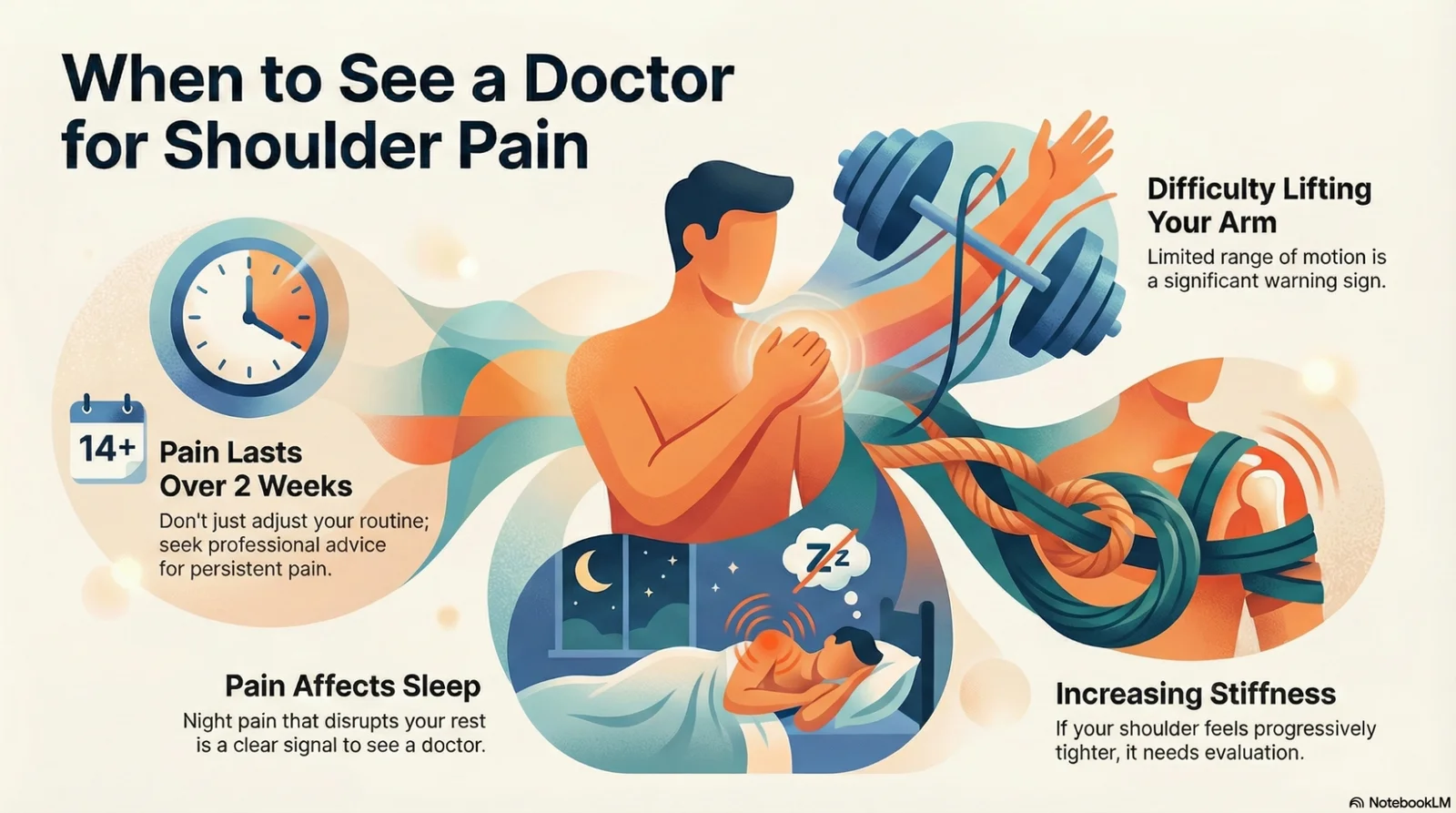
Early evaluation often means simpler treatment and better outcomes.
A final thought
Shoulder pain can slowly take away confidence in your own movement. Many patients tell me they did not realize how much they were compensating until the pain improved.
If you are looking for shoulder pain treatment in Nagpur, start with clarity. Understand what is causing the pain and what treatment is actually required.
My role as an Orthopedic doctor in Nagpur is not just about treating joints.
It is to help you return to normal movement, comfort, and daily life with the right plan at the right time.
Latest Post