
Stem Cell and PRP Therapy For Joint Preservation in Nagpur
Quick Enquiry
For years, joint pain often meant one of two outcomes: live with it or eventually undergo replacement surgery.
But with new advancements in regenerative medicine, there’s now a third path: joint preservation.
At Nagpur Arthroscopy & Sports Injury Centre, Dr. Siddharth Jain offers cutting-edge joint preservation therapies, including Stem Cell Therapy and PRP (Platelet-Rich Plasma) Therapy.
These treatments focus on healing, not replacing the joint, using the body’s own cells to repair damaged tissues, reduce inflammation, and delay or even avoid major surgery.
What Is Joint Preservation?
Joint preservation is a modern approach that aims to protect and restore natural joint function rather than replacing it with artificial implants.
It’s especially helpful for patients who:
- Have early-stage arthritis
- Suffer from cartilage or ligament injuries.
- Experience joint pain after sports or trauma
- Want to stay active and avoid joint replacement.
The concept is simple: if we can help the joint heal early, we can preserve it longer. Dr. Siddharth offers regenerative orthopaedic therapy in Nagpur.
Stem Cell Therapy: Healing From Within
Stem cells are special cells in your body that can grow into various tissues, including bone, cartilage, and muscle.
In stem cell therapy, these cells (often taken from bone marrow or fat tissue) are processed and injected into the damaged joint.
How it helps:
- Reduces inflammation
- Promotes repair of cartilage and soft tissue
- May slow the progression of arthritis
- Aims to delay or prevent joint replacement
It’s not magic. It’s science-based healing using your own cells.
While results vary, many studies (including the one referenced in PubMed Central) show encouraging outcomes for pain relief and improved mobility in early joint degeneration.
Dr. Siddharth Jain offers stem cell therapy for knee arthritis in Nagpur, which helps in protecting your natural joints.
PRP Therapy: Platelet-Rich Plasma for Orthopaedic Problems in Nagpur
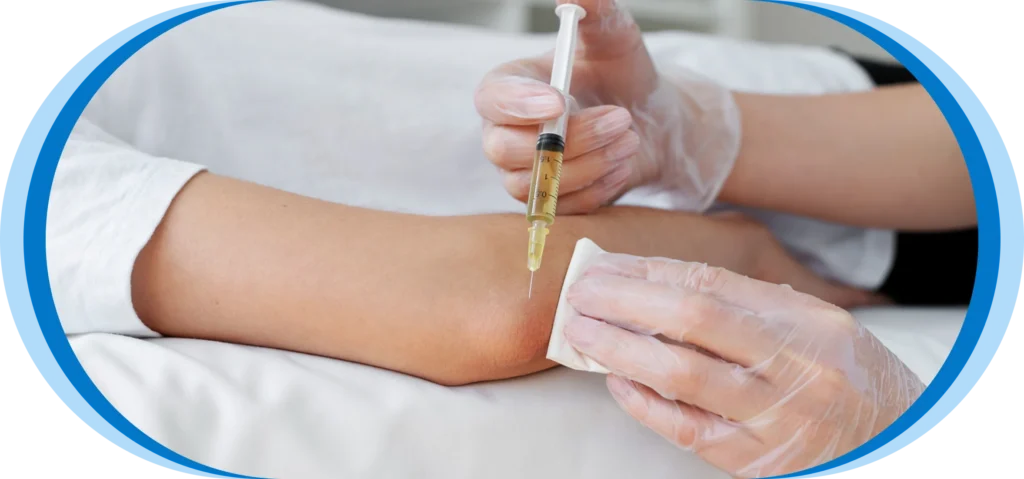
PRP (Platelet-Rich Plasma) therapy uses your own blood to help your joints heal naturally.
A small amount of blood is drawn, processed to concentrate platelets, and then injected into the affected joint under sterile, ultrasound-guided conditions.
Why platelets matter:
Platelets contain growth factors, powerful proteins that promote tissue repair, reduce inflammation, and support new cell growth.
PRP therapy can help:
- Mild to moderate osteoarthritis
- Tendon or ligament injuries
- Post-arthroscopy recovery
- Persistent sports injuries
Patients often notice gradual improvement in pain and flexibility over several weeks. Dr. Siddharth uses PRP injections for knee pain in Nagpur and has seen remarkable results in his patients.
Stem Cell vs. PRP — Which One’s Right for Orthopaedic Problems
Aspect | Stem Cell Therapy | PRP Therapy |
Source | Bone marrow or fat cells | Blood (platelets) |
Focus | Regeneration of damaged cartilage and tissue | Reducing inflammation and stimulating healing |
Best for | Early arthritis, cartilage loss, and major injuries | Mild arthritis, tendon issues, post-surgical healing |
Recovery time | A few days | Same day |
Goal | Repair and rebuild | Relieve and restore |
Sometimes, these treatments are even combined for better outcomes.
How Dr. Siddharth Performs PRP or Stem Cell Therapy for Orthopaedic Problems in Nagpur
Consultation and Evaluation
Dr. Jain will assess your joint with clinical exams and imaging to determine if you’re a good candidate.
Sample Collection
For PRP: A small blood sample is drawn.
For Stem Cell: Cells are collected from bone marrow or fat tissue under local anaesthesia.
Processing and Injection
The prepared cells or plasma are precisely injected into the affected joint under sterile, ultrasound-guided conditions.
What Science Says
According to recent studies published in medical journals like PubMed Central (PMC6306612), regenerative treatments such as stem cell and PRP therapy have shown promising improvements in:
- Pain control
- Function and range of motion
- Cartilage preservation in early osteoarthritis
However, researchers also note that these therapies are still evolving, with results varying among patients. Ongoing research continues to refine techniques, dosing, and long-term outcomes.
Why Choose Nagpur Arthroscopy & Sports Injury Centre
Dr. Siddharth Jain’s Approach
“The idea of joint preservation excites me because it shifts our focus from replacing damaged joints to helping them heal.
Not every patient needs surgery. When used responsibly, stem cell and PRP therapies can extend the life of a natural joint, especially when combined with the right lifestyle and rehabilitation.”
At Nagpur Arthroscopy & Sports Injury Centre, treatments are performed using sterile, evidence-based protocols with complete transparency about potential benefits and limitations.
Who Can Benefit from Joint Preservation?
These therapies are suitable for people who:
- Have mild to moderate joint damage (not end-stage arthritis)
- Experience pain, swelling, or stiffness limiting movement
- Want to avoid or delay joint replacement.
- Have sports injuries that aren’t healing fully
- Are medically fit for minimally invasive procedures
Things You Should Know Before Opting for PRP or Stem Cell Therapy for Orthopaedic Problems
- Stem cell and PRP therapies are safe, as they use your own cells.
- Results can vary based on age, lifestyle, and extent of damage.
- They are not instant cures. Improvement builds over time.
Frequently Asked Questions about PRP Therapy for Joint Preservation in Nagpur
Are stem cell and PRP therapies safe?
Yes. Since they use your own blood or cells, allergic reactions are extremely rare. The procedures are performed under sterile conditions by trained specialists.
How long do the effects last?
Results vary, but many patients experience reduced pain and better movement for 1–2 years or longer, depending on lifestyle and joint condition.
Can these therapies replace knee or hip replacement surgery?
Not always. They are most effective in early joint degeneration. In advanced cases, they may delay surgery but not replace it completely.
How soon will I notice improvement?
Most patients feel gradual relief over 4–6 weeks as the healing process continues inside the joint.
Are these treatments approved and scientifically backed?
Yes, both therapies are supported by ongoing research and medical evidence (as published in journals like PMC6306612). They are approved for use in accordance with ethical medical practice when performed by qualified orthopaedic specialists.